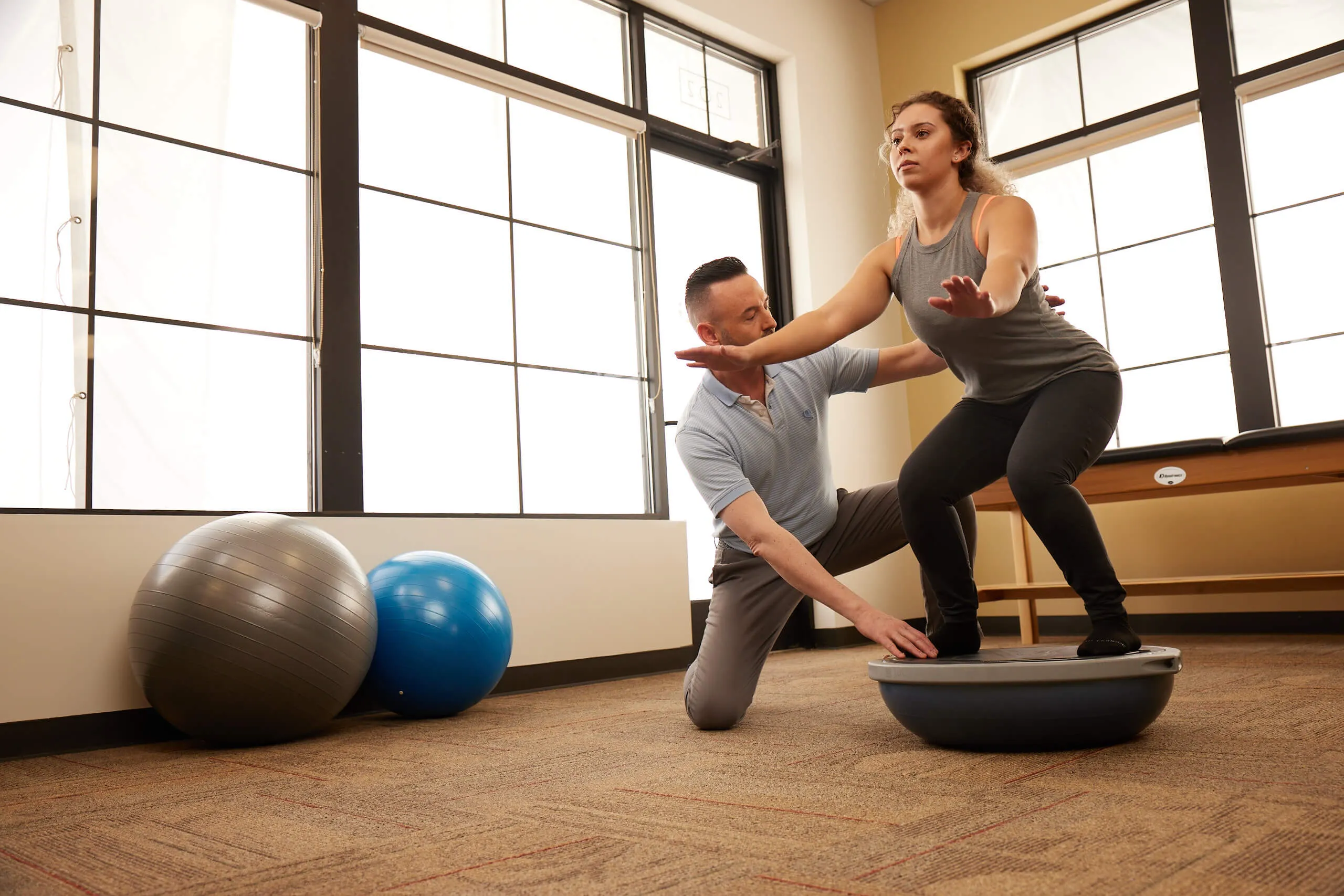
Sports medicine focuses on physical activity, exercise, and sports-related injuries. Providers treat professional athletes, but they also see weekend runners and student-athletes. Your care team develops an individualized treatment plan that addresses your injuries and activity levels while helping you return to activities safely. Here is more information about what sports medicine entails:
Injury Prevention
Many sports injuries develop from movement patterns that a clinician may identify before pain begins. In a preventive care appointment, your doctor assesses flexibility, strength, and mechanics to look for imbalances. Runners sometimes complete a gait analysis on a treadmill, while pitchers and swimmers have their shoulder range of motion measured. Based on the exam results, a sports medicine specialist may recommend:
- Warm-up routines that prepare specific muscle groups
- Strength and conditioning programs matched to a sport’s demands
- Guidance on equipment, such as footwear, helmets, and braces
- Training loads that limit sudden jumps in intensity
- Preparticipation physical exams for school and club athletes
Diagnosis and Evaluation
Accurately identifying the cause of an injury is key for effective treatment and a safe return to activity. An appointment often begins with questions about your symptoms, activity level, and medical history. Doctors also ask when the pain started and whether it changes during the day. A physical exam follows, and it tests range of motion, joint stability, and strength.
Imaging helps confirm or rule out specific conditions. X-rays show bones and are often used for suspected fractures or arthritis. An MRI provides detailed images of ligaments, tendons, and cartilage, and ultrasound lets a provider view tendons and muscles while you move. Some clinics also perform functional tests to compare the injured side with the uninjured side.
Surgical Interventions
Many sports injuries are treated without surgery. When conservative care does not resolve the problem, or when a structure is fully torn, a doctor may recommend surgery. Common procedures include:
- ACL reconstruction for a torn ligament in the knee
- Meniscus repair or removal of damaged tissue
- Rotator cuff repair for a torn shoulder tendon
- Treatment for SLAP tears affecting the shoulder labrum
Surgeons perform many of these procedures arthroscopically. During arthroscopy, the surgeon inserts a small camera and narrow instruments through a few small incisions. Recovery time and outcomes vary by procedure and the injury’s severity; ask your surgeon to outline your expected recovery before you decide.
Rehabilitation and Recovery
Rehabilitation often begins soon after an injury or surgery and may continue for weeks or months. A physical therapist designs the program in phases. Early phases focus on controlling swelling and restoring motion, while later phases add strength and balance. Doctors may also include sport-specific drills, such as cutting for soccer players or throwing progressions for baseball players. Return-to-play decisions are based on measurable criteria, not time alone. Your care team compares strength between limbs, checks range of motion, and reviews your functional test results. Some programs also address the mental side of returning after an injury; hesitation or fear of reinjury may change how a person moves.
Visit a Sports Medicine Specialist
A sports medicine specialist evaluates injuries and conditions related to physical activity. You might schedule a visit for a recent injury, pain that lasts longer than a week or two, or questions about training safely. The specialist will review your history and explain the available treatment options. Contact a sports medicine clinic today to schedule an appointment.
- What Does Sports Medicine Entail?
- Using EMSella for Pelvic Health
- Navigating Post-treatment Care After Halo Laser Resurfacing
- Physical Therapy Rehabilitation Techniques
- The Transformative Power of Mental Therapy in Daily Life
