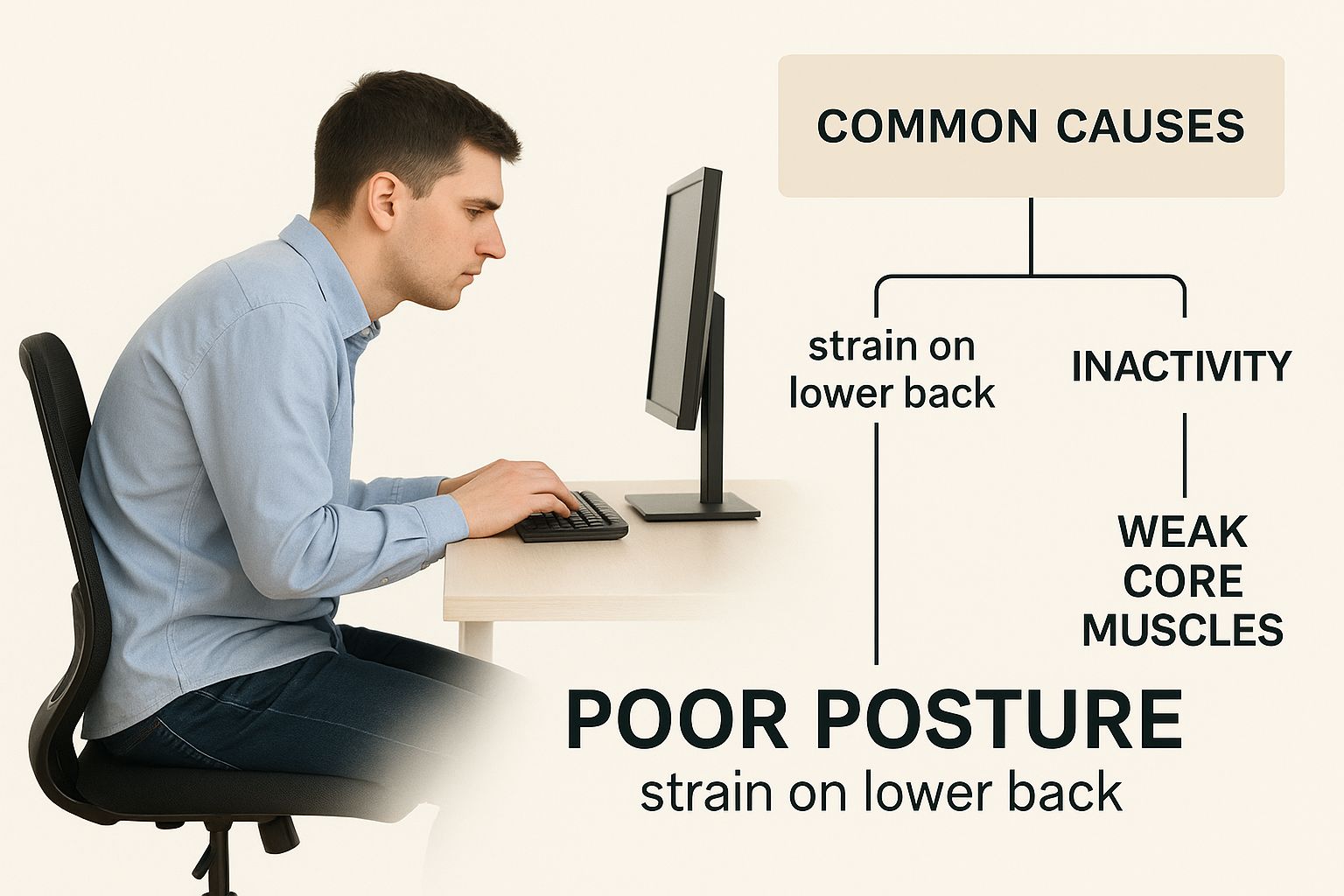
Poor posture can place extra strain on the muscles, joints, and structures that support the spine. Habits such as slouching or using improper body positioning may contribute to back pain and stiffness over time. Here is more information on the impact of posture on back pain:
Increase Back Muscle Strain
Your back muscles support the spine and hold the body upright. When you slouch or lean forward for long periods, these muscles work harder to keep your head and upper body balanced. Over time, this extra effort may lead to muscle fatigue, tightness, and back pain. Muscle strain does not always show up right away. Tension often builds gradually, and people may notice it only at the end of a workday. Uneven strain can also affect one side of the body more than the other if you regularly carry a bag on one shoulder or lean on one hip.
Alter Spinal Alignment
A healthy spine has three natural curves: one in the neck, one in the upper back, and one in the lower back. These curves help distribute body weight evenly. Poor posture flattens or exaggerates these curves, shifting pressure onto specific joints and worsening back pain. Discs are soft cushions between the bones of the spine, and they absorb shock when you move. Changes in alignment may also limit how freely the spine moves. Stiff joints reduce your ability to bend, twist, or reach. The surrounding muscles then compensate for the lost motion, and this pattern repeats.
Worsen Pain During Activities
Posture affects how you sit at a desk and how your body handles routine tasks. The following activities often place extra stress on the back when you perform them with poor posture:
- Sitting for long periods: Slouching in a chair rounds the lower back and increases pressure on the discs.
- Using a phone or tablet: Looking down tilts the head forward and strains the neck and upper back.
- Lifting objects: Bending at the waist instead of the knees shifts the load to the lower back muscles.
- Driving: A seat placed too far from the pedals or steering wheel encourages you to lean forward.
- Sleeping: A sagging mattress or a pillow that is too high keeps the spine out of line for hours.
Improve Posture and Reduce Stress
Posture changes are a fundamental part of conservative care plans. Adjustments to your workspace and movement habits can reduce uneven stress on your back and require little equipment. The following areas offer a practical starting point for making consistent changes.
Adjust Your Sitting Setup
Place your feet flat on the floor and keep your knees level with or slightly below your hips. Position your screen at eye level so you do not tilt your head down. A small cushion behind your lower back supports its natural curve, and it reduces the urge to slouch.
Change How You Move
Keep your weight balanced on both feet, and avoid locking your knees. When you lift an object, bend your knees and hold it close to your body. Gentle stretching and core-strengthening exercises can support better posture over time. A physical therapist can show you which movements suit your condition.
Schedule Your Back Pain Consultation
Poor posture increases strain on back muscles, alters spinal alignment, and makes routine activities more uncomfortable. Posture changes are a helpful first step, but they do not replace a professional evaluation. Incorporating gentle stretches and core-strengthening exercises can further improve stability and posture over time. If your back pain, sciatica, or nerve-related symptoms persist, a neurosurgeon can identify the source and recommend treatment options. Contact a qualified neurosurgeon near you to schedule your back pain consultation today.
- How Medical Weight Loss Supports Better Health
- Understanding the Role of a Gastroenterologist in Digestive Health
- The Role of Family Involvement in Addiction Treatment Centers
- How Primary Care Can Help Manage Chronic Conditions
- What is Reflux Disease?
