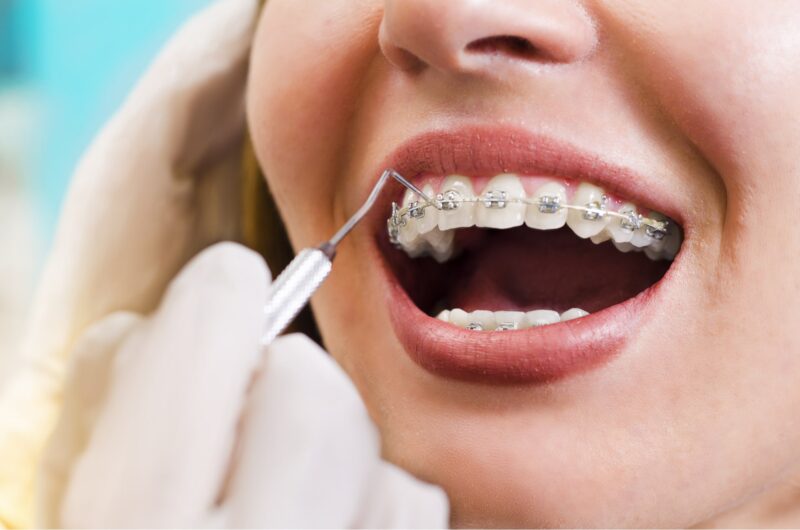
Orthodontics focuses on the alignment of teeth and jaws, and it can address dental issues. Many people start treatment in childhood, but adults also seek care later in life. If you have crowded teeth, gaps, or an uneven bite, an orthodontist may suggest one or more appliances. Here are some orthodontic options for adults:
Dental Braces
When some people begin orthodontics, they get traditional metal braces. These braces use small brackets bonded to the front of each tooth. A thin archwire runs through the brackets, and the orthodontist adjusts it at regular visits. Each adjustment applies steady pressure to move the teeth gradually.
Metal braces are not the only choice, and many adults prefer a less visible option. Ceramic braces work like metal braces, although their brackets match the color of your teeth. Lingual braces attach to the back surfaces of the teeth. Because they sit behind the teeth, lingual braces are hard to see from the front.
Clear aligners offer another alternative to fixed braces. Instead of brackets, you wear custom plastic trays that fit snugly over your teeth. You switch to a new set every one to two weeks, and each set shifts your teeth slightly.
Rubber Bands
Braces move individual teeth, but some bite problems need extra force between the jaws. Orthodontic rubber bands, also called elastics, supply that force. Since each band connects the upper and lower brackets, it pulls the jaws toward a new position. Orthodontists typically use elastics for the following bite issues.
- Overbite: The upper front teeth extend far past the lower teeth.
- Underbite: The lower teeth sit in front of the upper teeth.
- Crossbite: Some upper teeth sit inside the lower teeth.
- Open bite: The front teeth do not meet when you bite down.
Palatal Expanders
While palatal expanders are used with children, some adults use them too. A palatal expander widens the upper jaw, and it creates room for crowded teeth. The device fits against the roof of your mouth. It attaches to the upper back teeth with metal bands or bonding material.
Adult expansion differs from expansion in children. A child’s upper jaw has a flexible seam, but an adult’s jawbone is fully fused. Since the bone is solid, an orthodontist may anchor the expander with tiny screws called mini-implants. Your orthodontist will explain which approach fits your jaw structure.
Dental Retainers
Once your braces come off, your teeth tend to drift back toward their old positions. A retainer holds them in place, and your orthodontist will set a wear schedule for you. Your orthodontist chooses a type based on your bite and how your teeth moved during treatment. Most retainers fall into one of three types.
- Hawley retainers: A removable acrylic plate with a thin wire across the front teeth.
- Clear retainers: Removable plastic trays similar in shape to aligners.
- Fixed retainers: A thin wire bonded to the back of the front teeth.
Your retainer is a key part of maintaining your new smile, and proper wear leads to lasting results. Following your orthodontist’s instructions can help prevent teeth from shifting back over time. While the type of retainer you receive may vary, each is designed to complement your unique treatment plan and provide effective, long-term stability.
Visit an Orthodontics Clinic
Each option serves a different purpose, and many adults use more than one during treatment. An exam with an orthodontist is the first step. During the visit, you can ask about treatment timelines, costs, and insurance coverage. If you have questions about your teeth or bite, book a consultation with an orthodontics clinic near you.
- How Medical Weight Loss Supports Better Health
- Understanding the Role of a Gastroenterologist in Digestive Health
- The Role of Family Involvement in Addiction Treatment Centers
- How Primary Care Can Help Manage Chronic Conditions
- What is Reflux Disease?
